Blockchain-Enabled Metaverse IoT Communication Platform
Ensuring Data Integrity and Real-time Synchronization between Virtual Environments and Physical IoT Devices
Overview
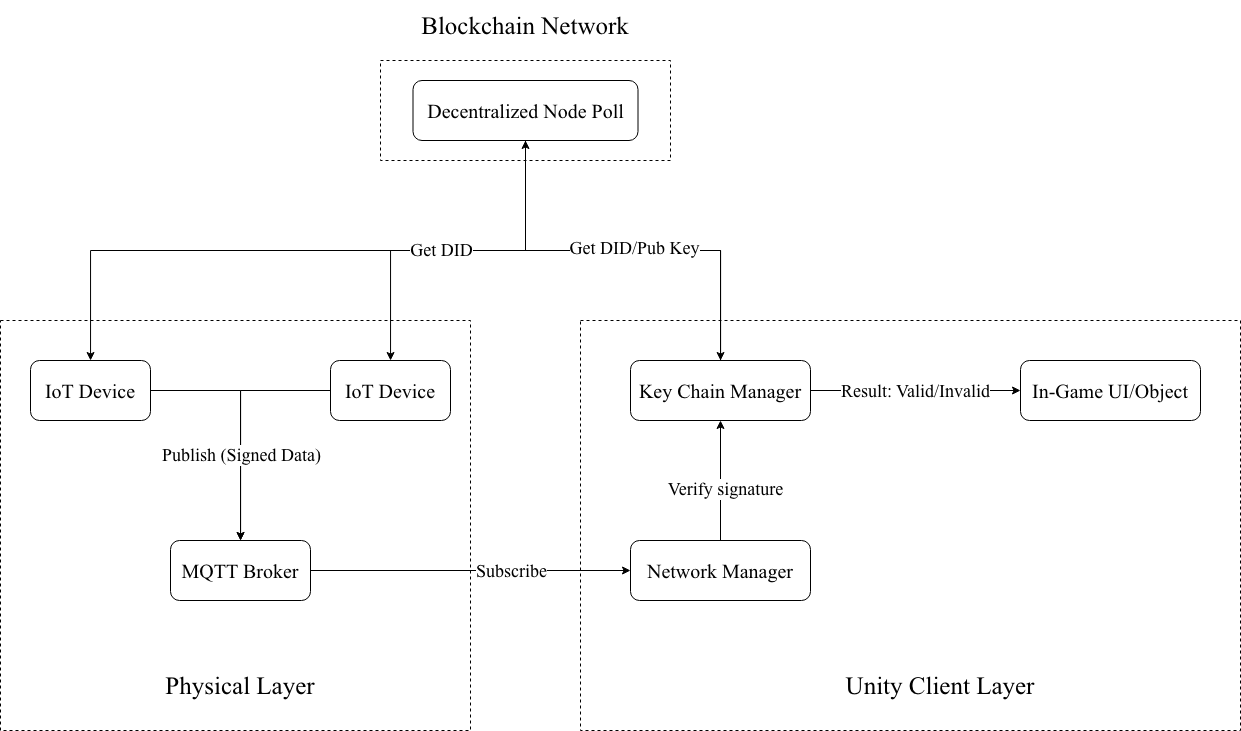
This project focuses on developing a decentralized platform for secure and efficient data communication between metaverse environments and physical IoT devices. By integrating Decentralized Identifier (DID) based identity verification with the MQTT protocol, the system achieves robust data integrity and low-latency interaction. The platform leverages Hyperledger Indy to manage decentralized identities, ensuring trusted identification and verifiable credential management for all participating entities.
Technical Stack
| Category | Technologies |
|---|---|
| Blockchain / DID Ledger | Hyperledger Indy |
| IoT Communication | MQTT (Mosquitto Broker) |
| Metaverse Engine | Unity 3D |
| Backend | Node.js, Express.js |
| Frontend | React.js |
| Database | MongoDBal Engine 5 (UE5) |
| Language | C#, Ptthon |
Key Features
1. Decentralized Identity Management (DID/VC) via Hyperledger Indy
“Establishing User-Centric Identity Sovereignty and Device Ownership”
- Self-Sovereign Identity (SSI): Developed a DID system based on Hyperledger Indy, allowing users to own and control their identities without reliance on a centralized authority.
- Trust-Based Interaction: Utilized Verifiable Credentials (VC) to authenticate the ownership relationship between metaverse avatars and physical IoT devices, ensuring privacy-preserving data communication.
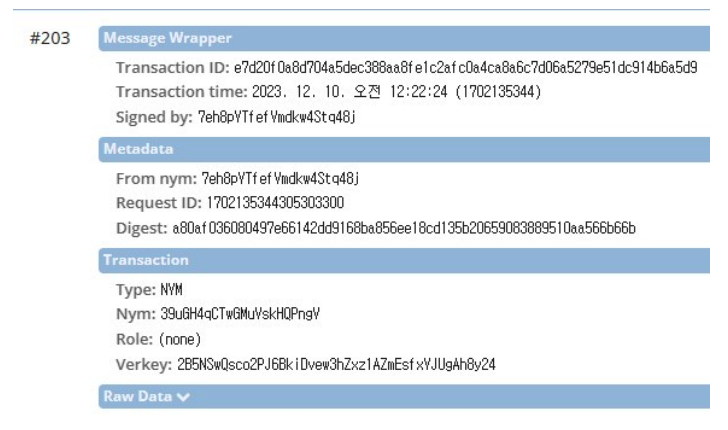
2. DPKI-Based IoT Data Integrity Framework
- Hierarchical Topic Design: Designed a structured MQTT topic schema (
home/devices/{DID}/{Sensor_Name}) to embed the device’s Decentralized Identifier (DID) directly within the message routing path. - Real-Time Integrity Verification: The Unity client extracts the DID from incoming topics and performs real-time lookups of the corresponding Public Key on the blockchain to verify digital signatures.
- Secure Architecture: Established a Decentralized PKI (DPKI) structure that eliminates Man-in-the-Middle (MITM) vulnerabilities and ensures the absolute reliability of data.
| Sensor Type | Topic Structure |
|---|---|
| Ultrasonic Sensor | home/devices/{device_DID}/ultrasonic |
| LED Module | home/devices/{device_DID}/led |
| Temperature Sensor | home/devices/{device_DID}/tem |
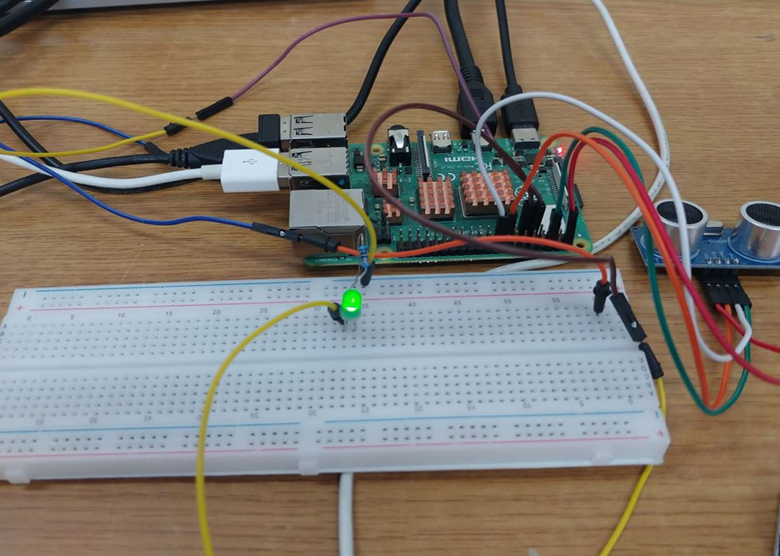
Figure 3. Sensors used in the implementation
3. Custom Packet Protocol based on MQTT Standards
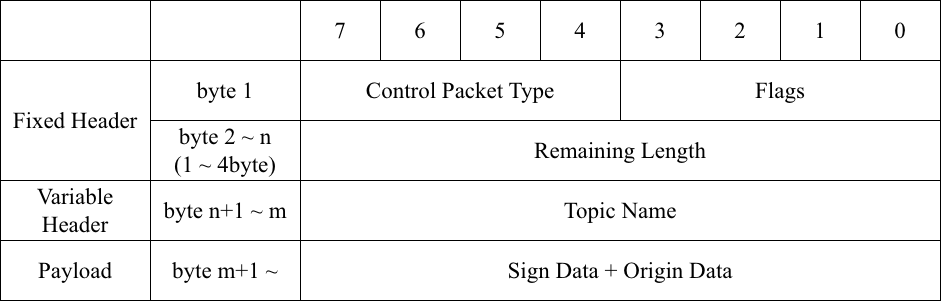
- Standard Compliance: Adhered to the MQTT v3.1.1 specification (Fixed/Variable Header, Payload) to ensure full interoperability with existing broker infrastructures.
- Automated Source Provenance: Positioned the DID within the Topic Name of the Variable Header, enabling immediate source identification before the data parsing stage.
- Security Packaging: Structured the payload as
[Raw Data + Digital Signature], allowing the receiver to validate the authenticity of each individual message instantaneously.
4. Immersive Metaverse Integration Interface
“Digital Twin-Based Intuitive IoT Control Environment”
- Unity Engine Integration: Achieved real-time synchronization and visualization of physical IoT device states within a 3D metaverse environment.
- Intuitive UI/UX: Implemented avatar-based device control and data flow visualization, providing users with an immersive monitoring experience as if interacting with physical objects.

Technical Problem Solving
1. High-Performance Asynchronous Verification Pipeline
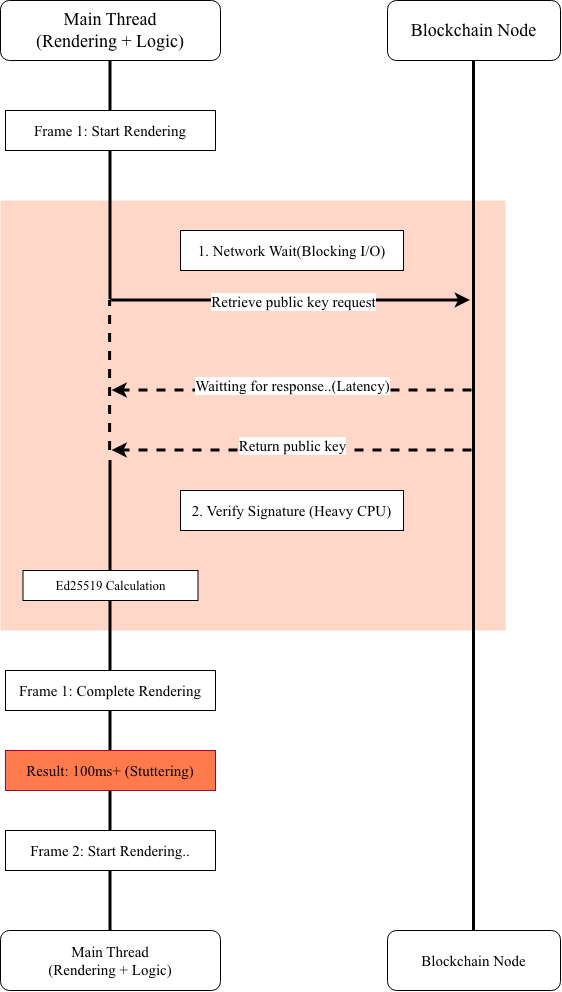
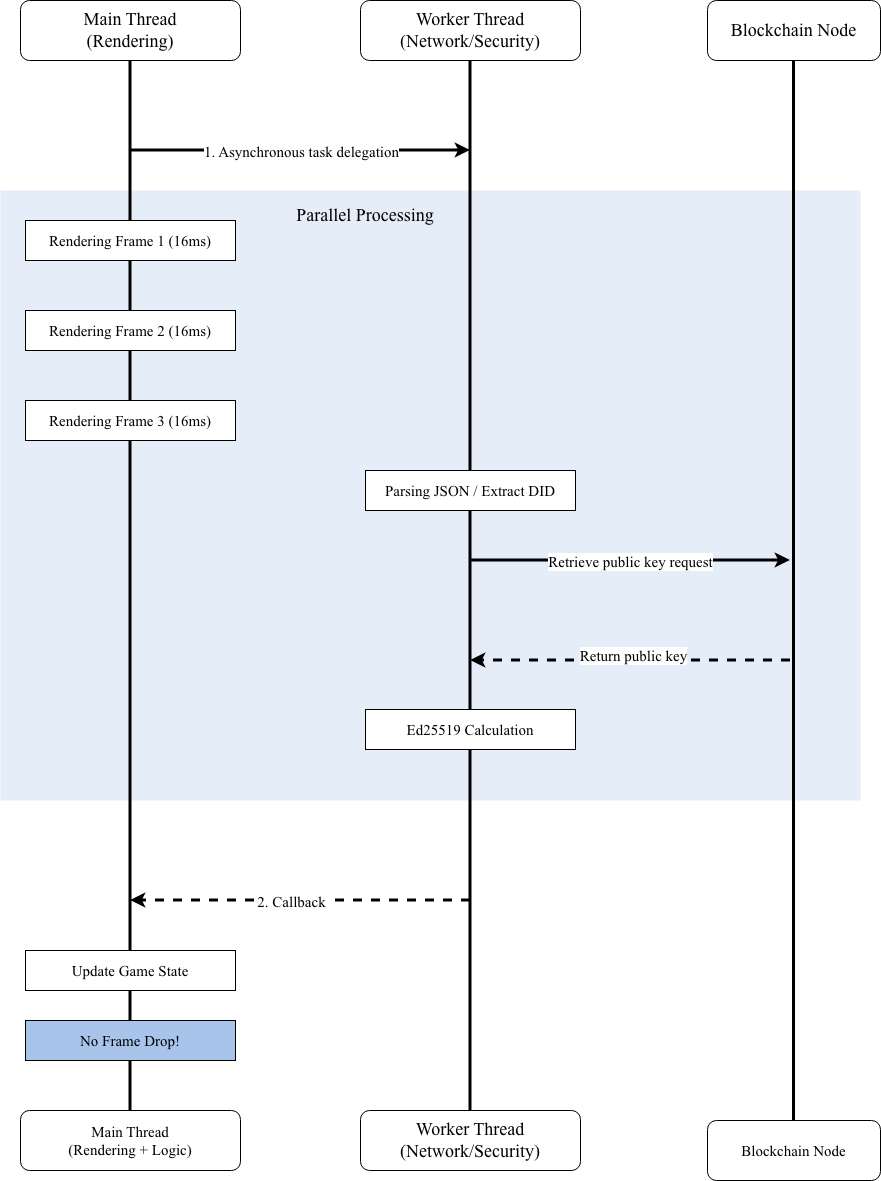
- Problem: Frequent blockchain lookups (I/O) and cryptographic signature verification (CPU) per frame caused main-thread bottlenecks and significant frame drops (hiccups).
- Solution: Implemented a Task-based Asynchronous Pattern (Async/Await) to decouple the networking, data verification, and UI rendering threads.
- Result: Successfully maintained a stable 60 FPS environment by optimizing the security layer overhead to within 4.3ms compared to raw MQTT.
2. Event-Driven Hierarchical Topic Architecture
- Problem: High coupling between code and devices led to difficulties in managing frequent device connections/disconnections and adding new device types at runtime.
- Solution: Engineered a hierarchical MQTT topic structure (
home/devices/{DID}/{Sensor}) to automate routing and utilized the Pub/Sub pattern to decouple the network module from in-game objects. - Result: Enabled seamless system scalability where new sensors can be added by simply deploying prefabs without modifying the core source code.
3. Security Validation
- Security: Conducted Man-in-the-Middle (MITM) attack simulations, resulting in 100% detection and blocking of tampered packets.
Publications & Awards
- Lead Author, “Integrity Assurance System in IoT Virtual Environment Platform: Via Hyperledger Indy and MQTT,” Journal of Korea Smart Media Society, Vol. 13, No. 4, April 2024. Link
- Outstanding Paper Award, “A Study on Digital Identification Technology for Decentralized Digital Ecosystems,” 2023 Korea Computer Digital Contents Society (KCDCS) Fall Conference.
- Bronze Award, “Development of IoT Communication Technology for Trusted Decentralized Metaverse,” 2023 Korea Computer Digital Contents Society (KCDCS) Fall Conference.